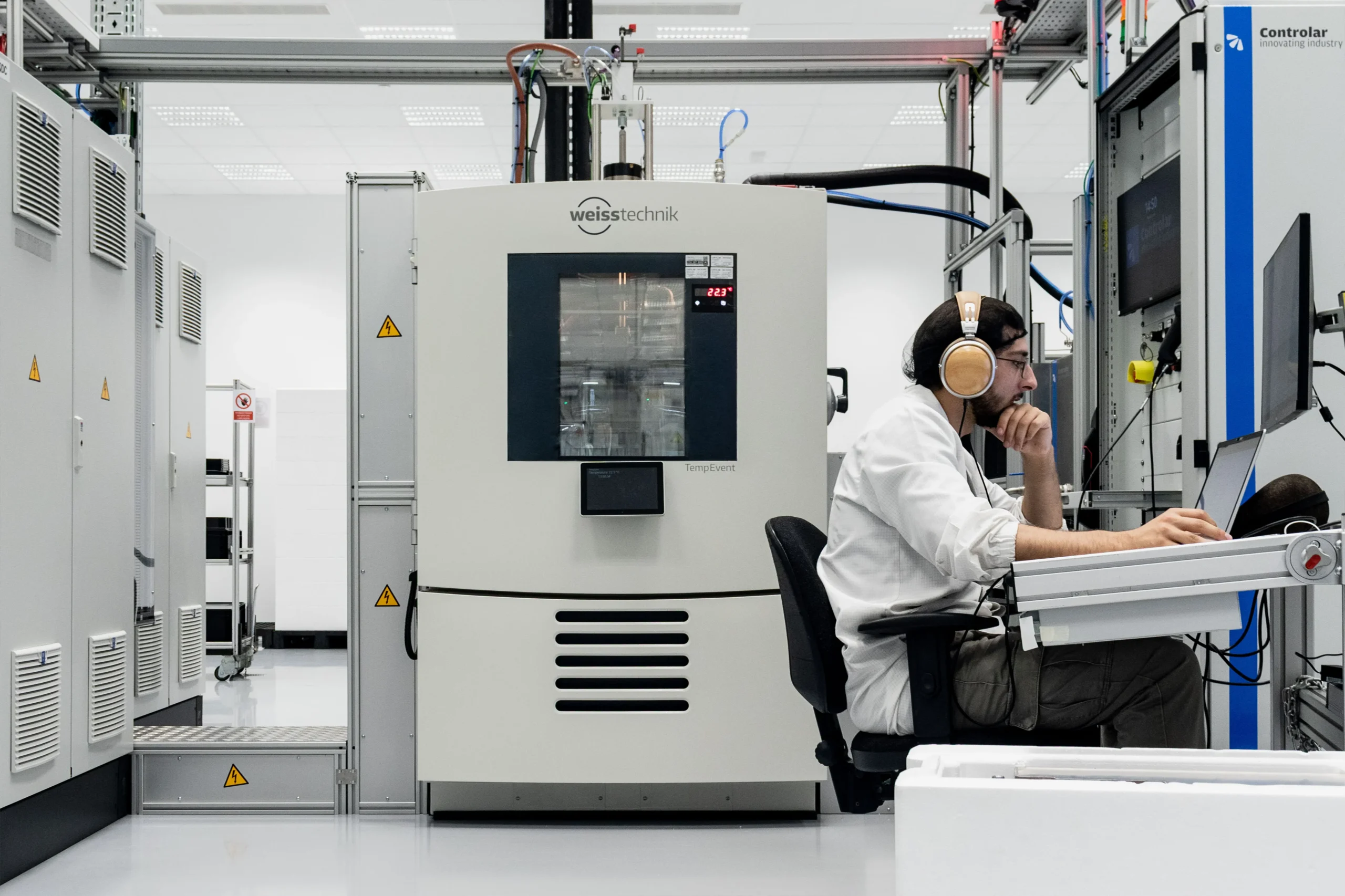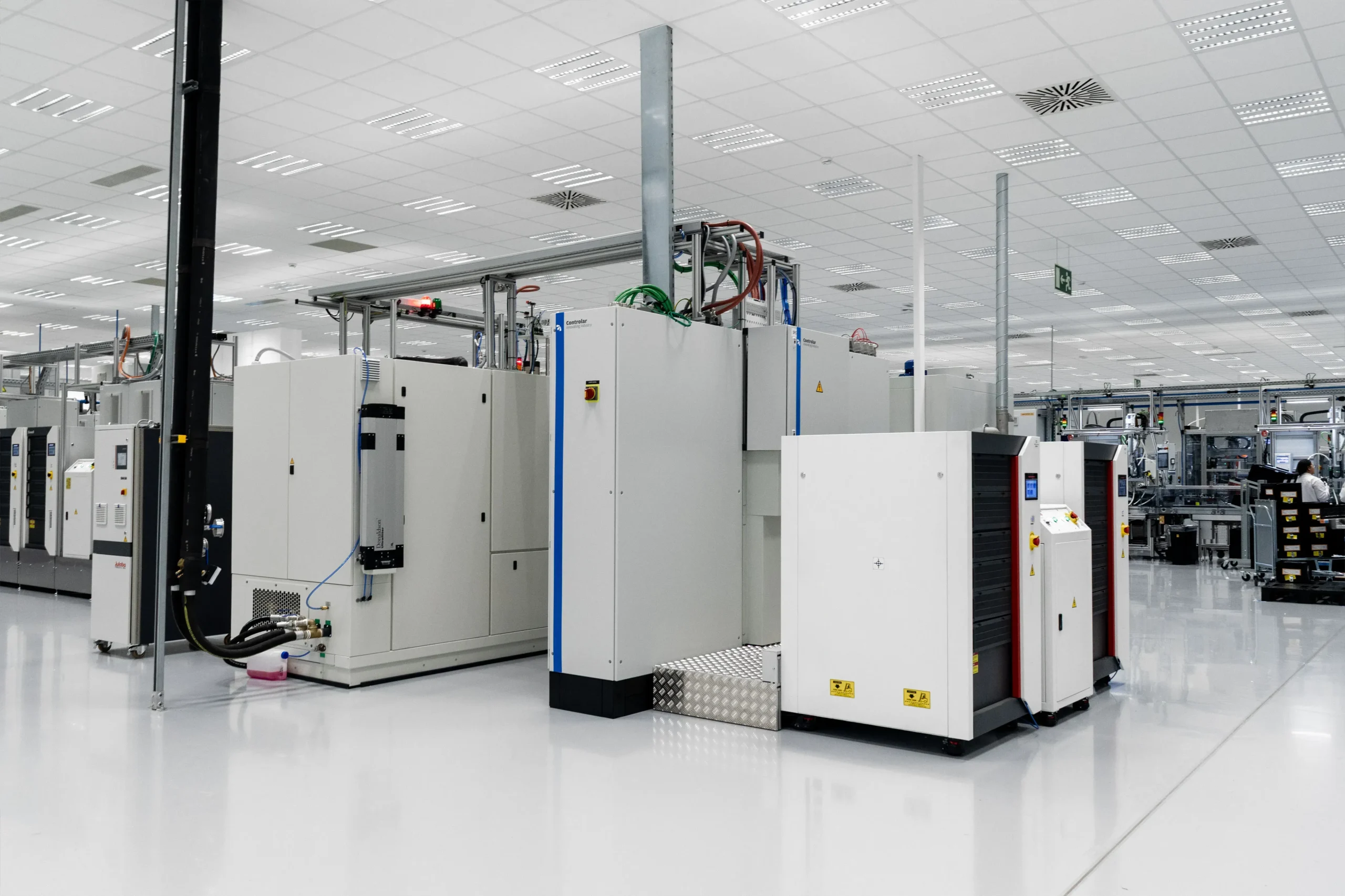
Controlar developed an Environmental Stress Screening (ESS) system to test a high-voltage DC-DC converter for electric vehicles under combined thermal and electrical stress, from −40 °C to +85 °C.
The Test Solution
The customer required a solution capable of performing functional screening on a high-voltage DC-DC converter: a critical electric vehicle powertrain component that receives 410 Vdc from a source simulating a charging station and converts this voltage to 800 Vdc, connected to a source simulating the vehicle battery, across an extreme temperature range and at full operational electrical load.
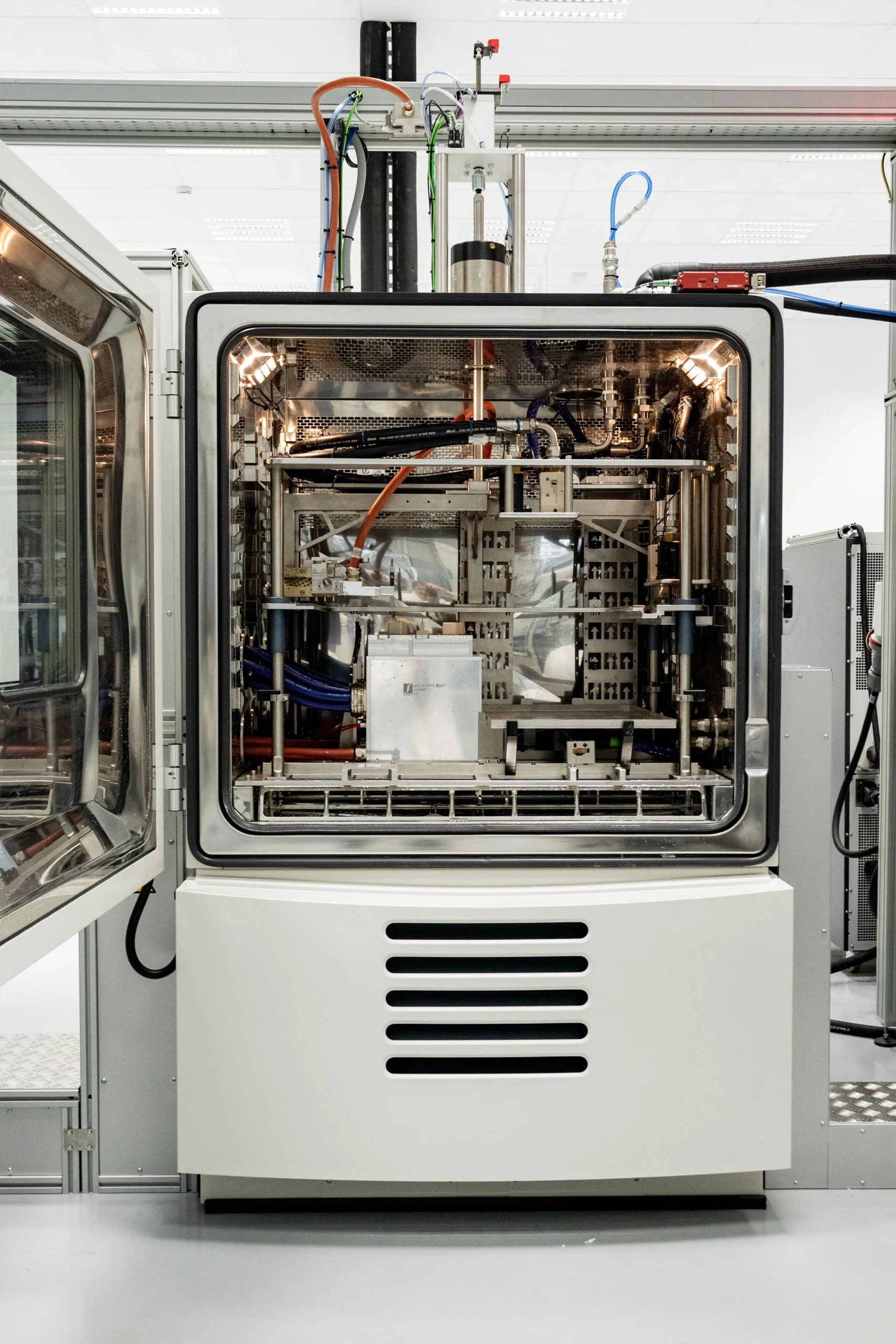
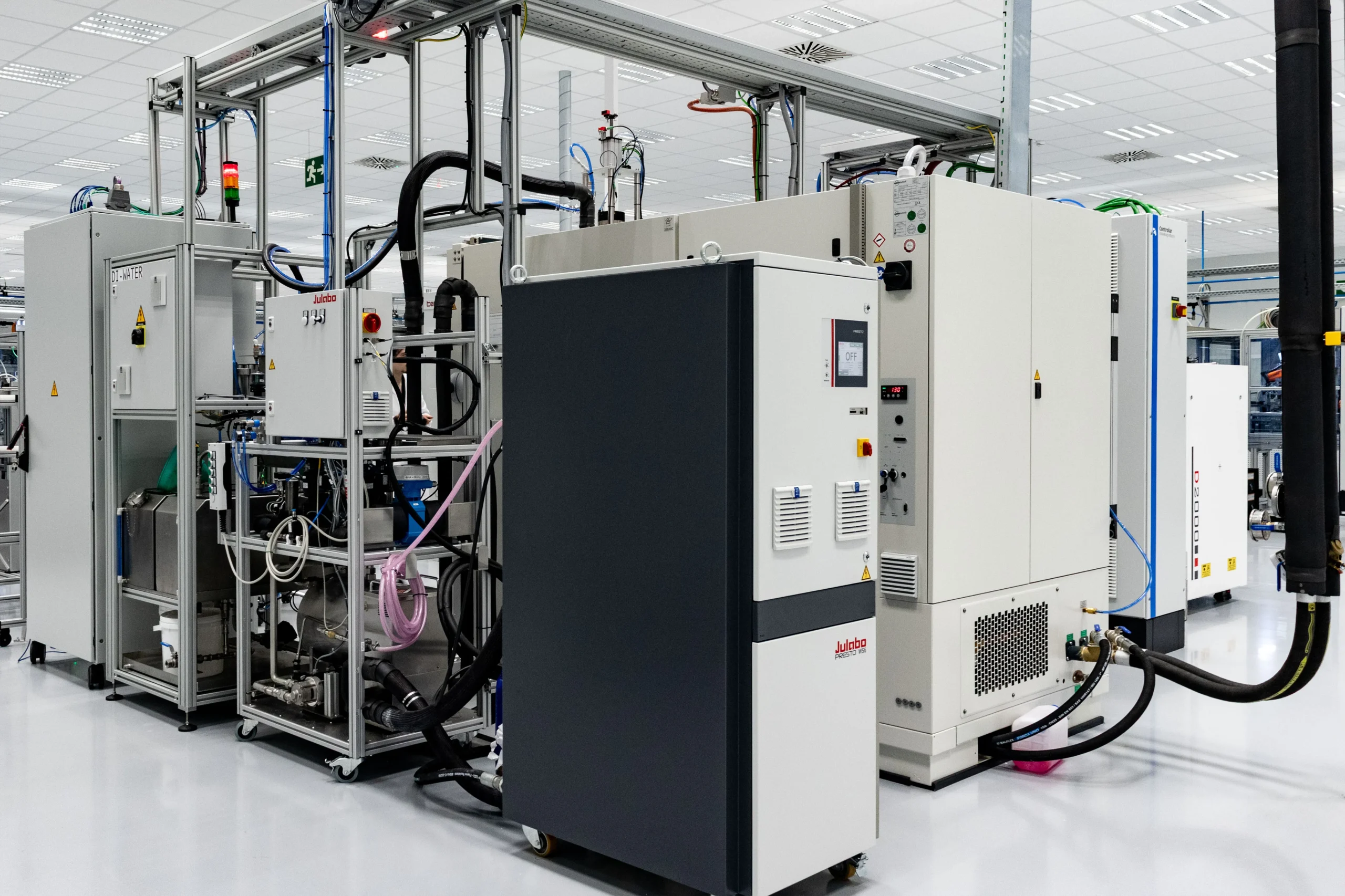
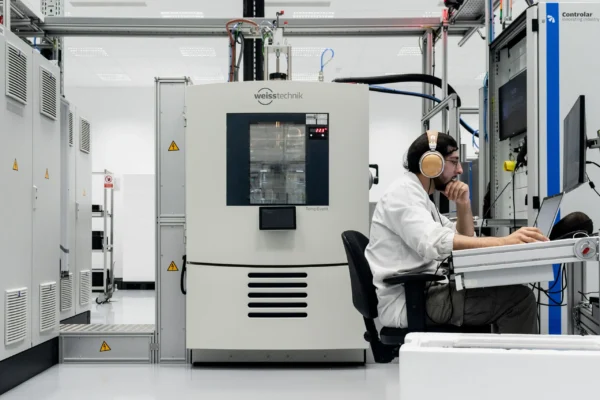
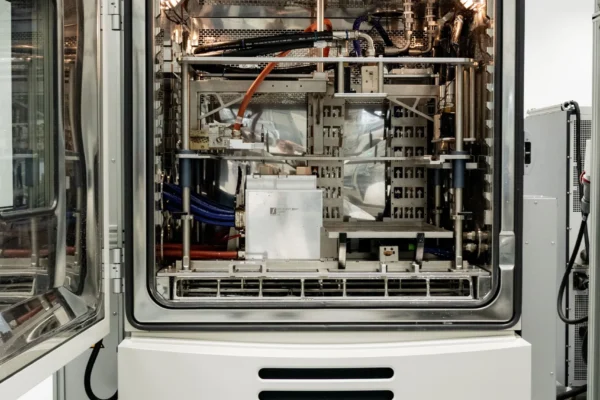
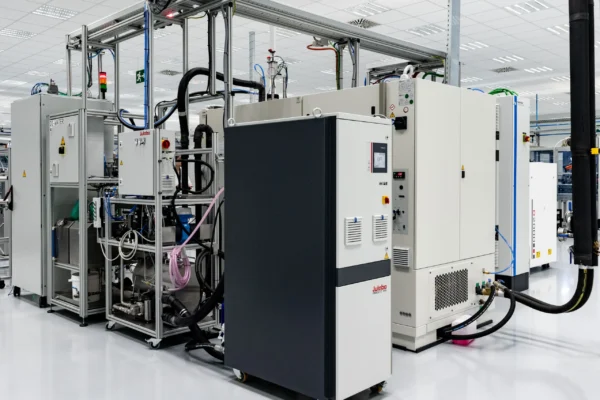
Based on its extensive experience in ESS and functional test systems for the automotive industry, Controlar’s Engineering department developed a fully integrated screening system built around a climatic chamber capable of inducing the required thermal profile, combined with a high-power electrical test bench.

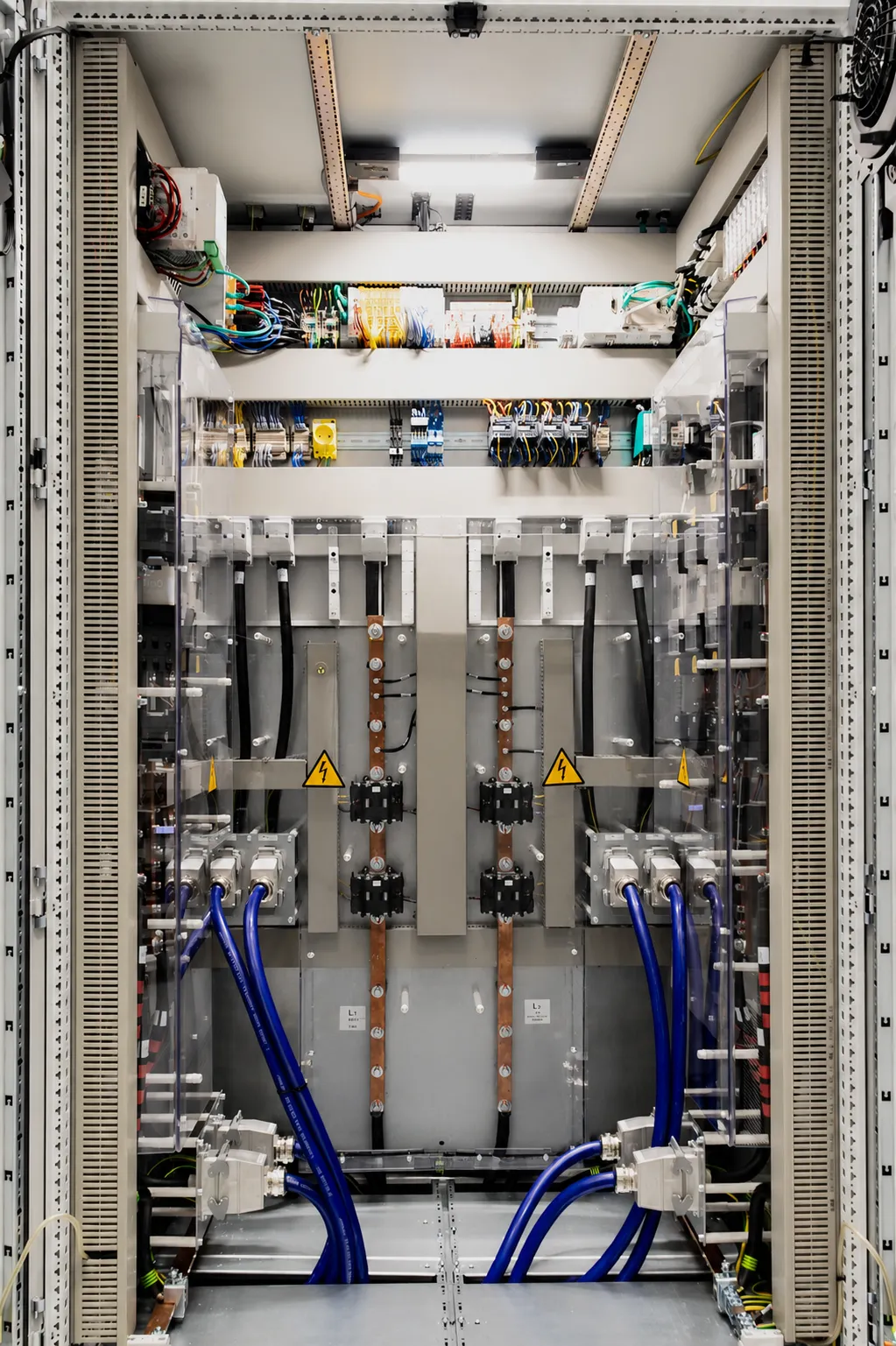
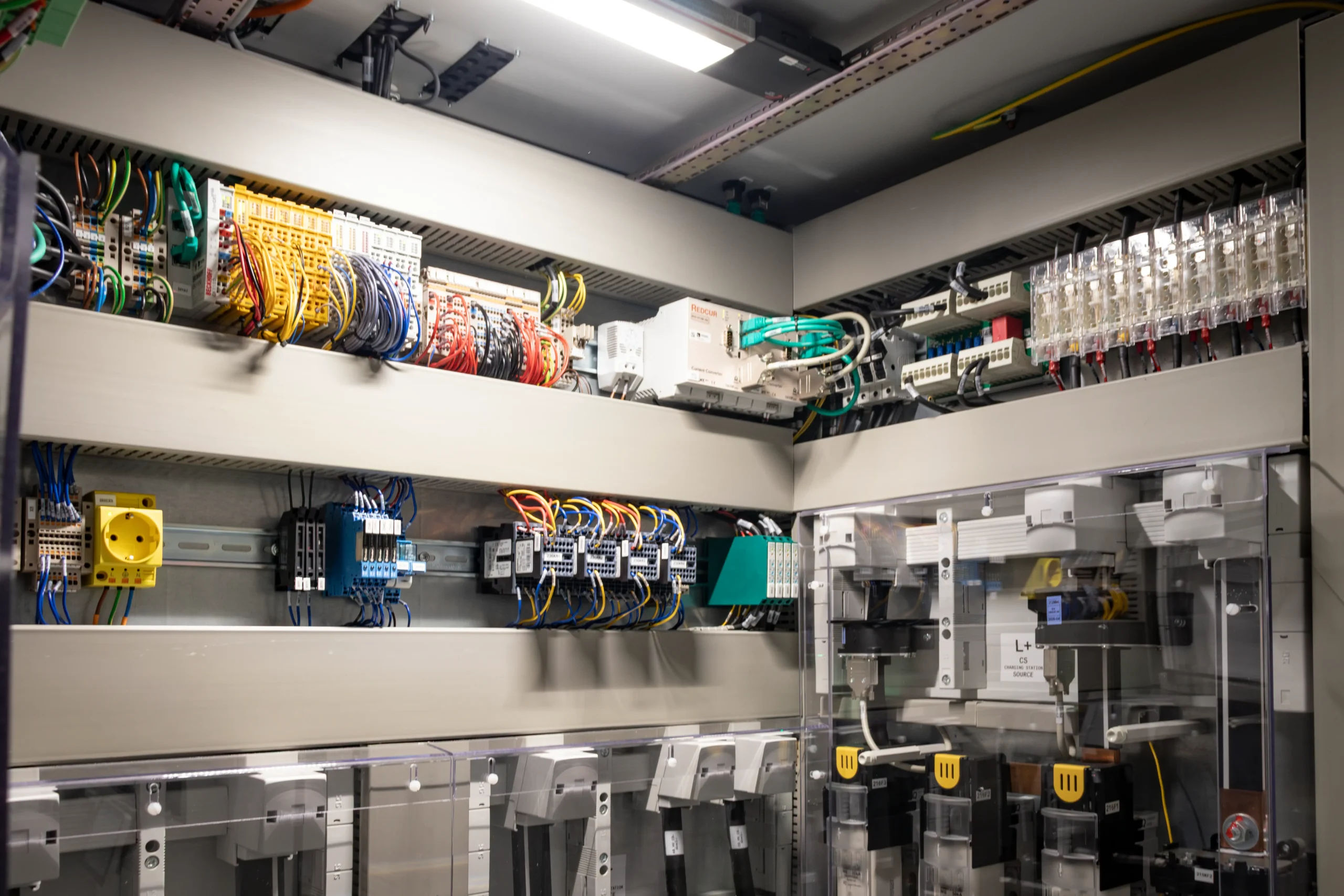
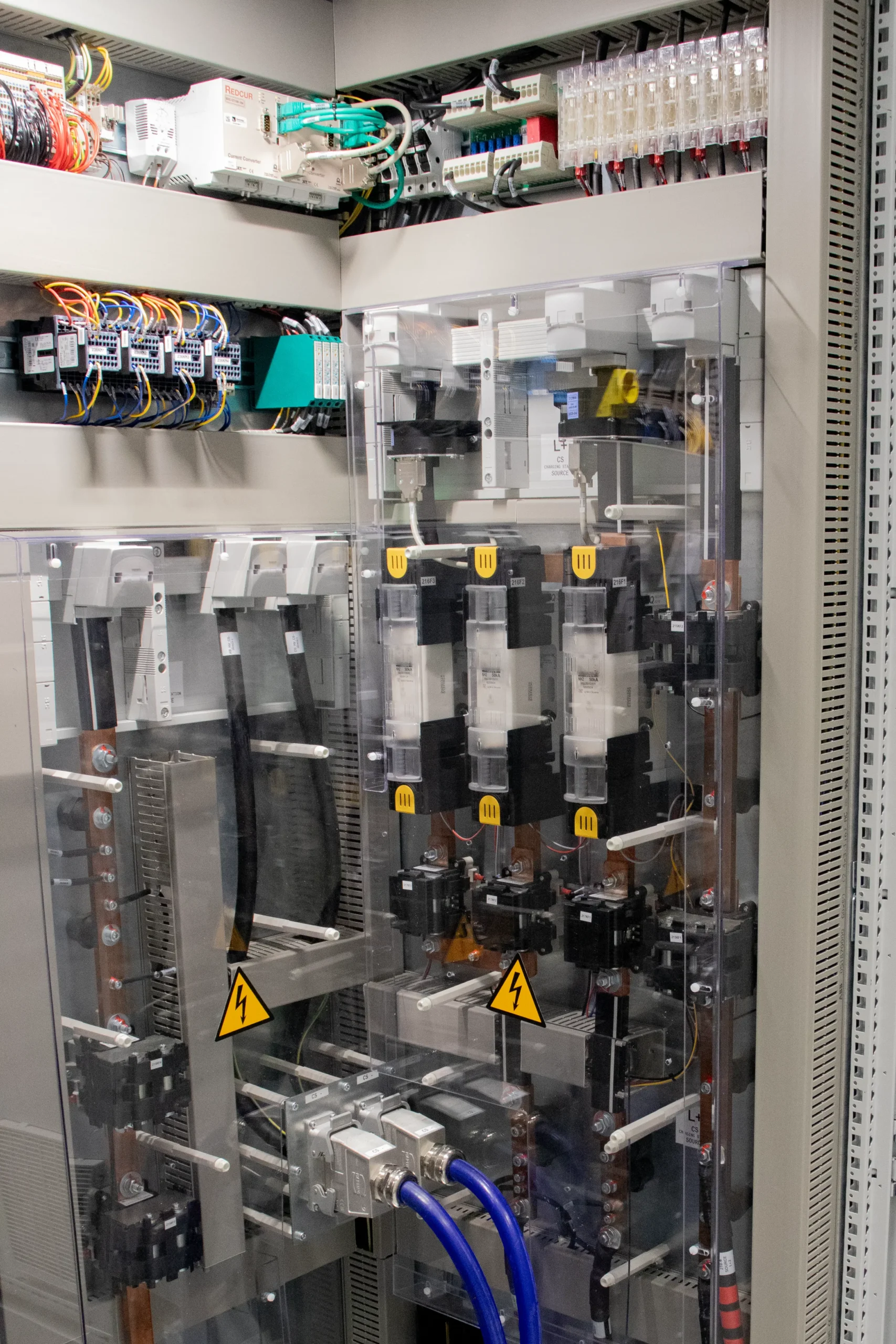
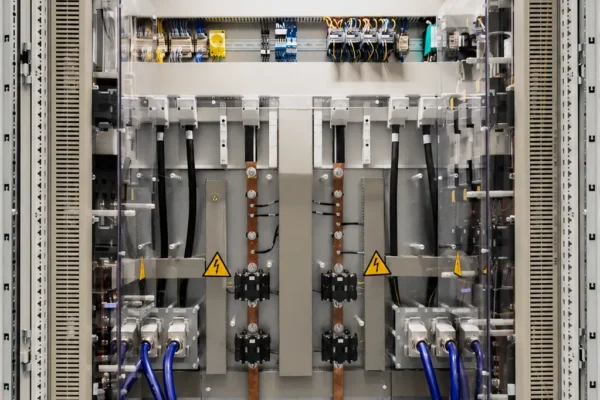
The system is equipped with two programmable DC power supplies: one configured as a charging station simulator (410 Vdc, up to 150 kW) and the other as a battery simulator (800 Vdc, up to 110 kW), supporting current tests of up to 250 A under real converter operating conditions.
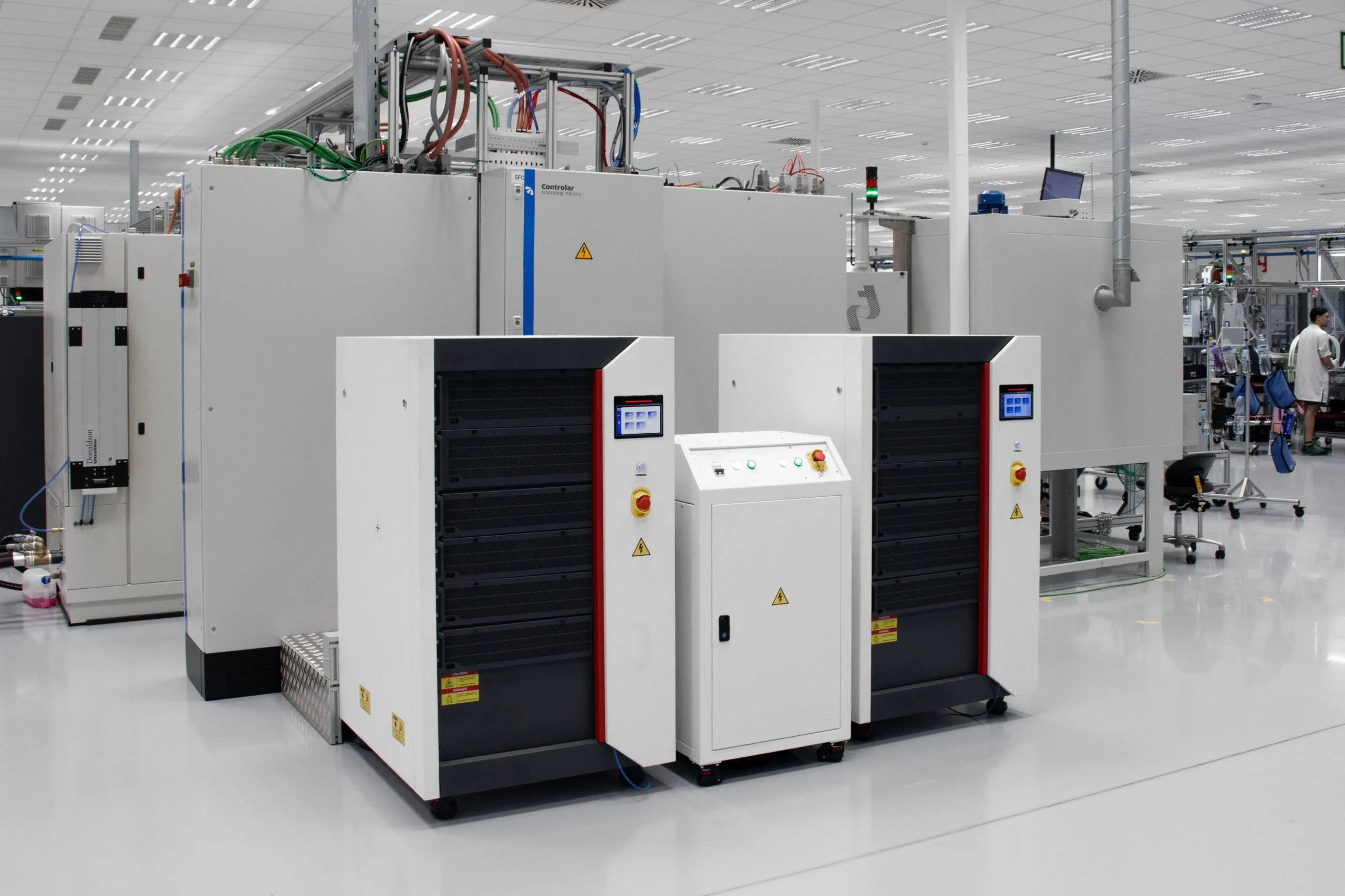
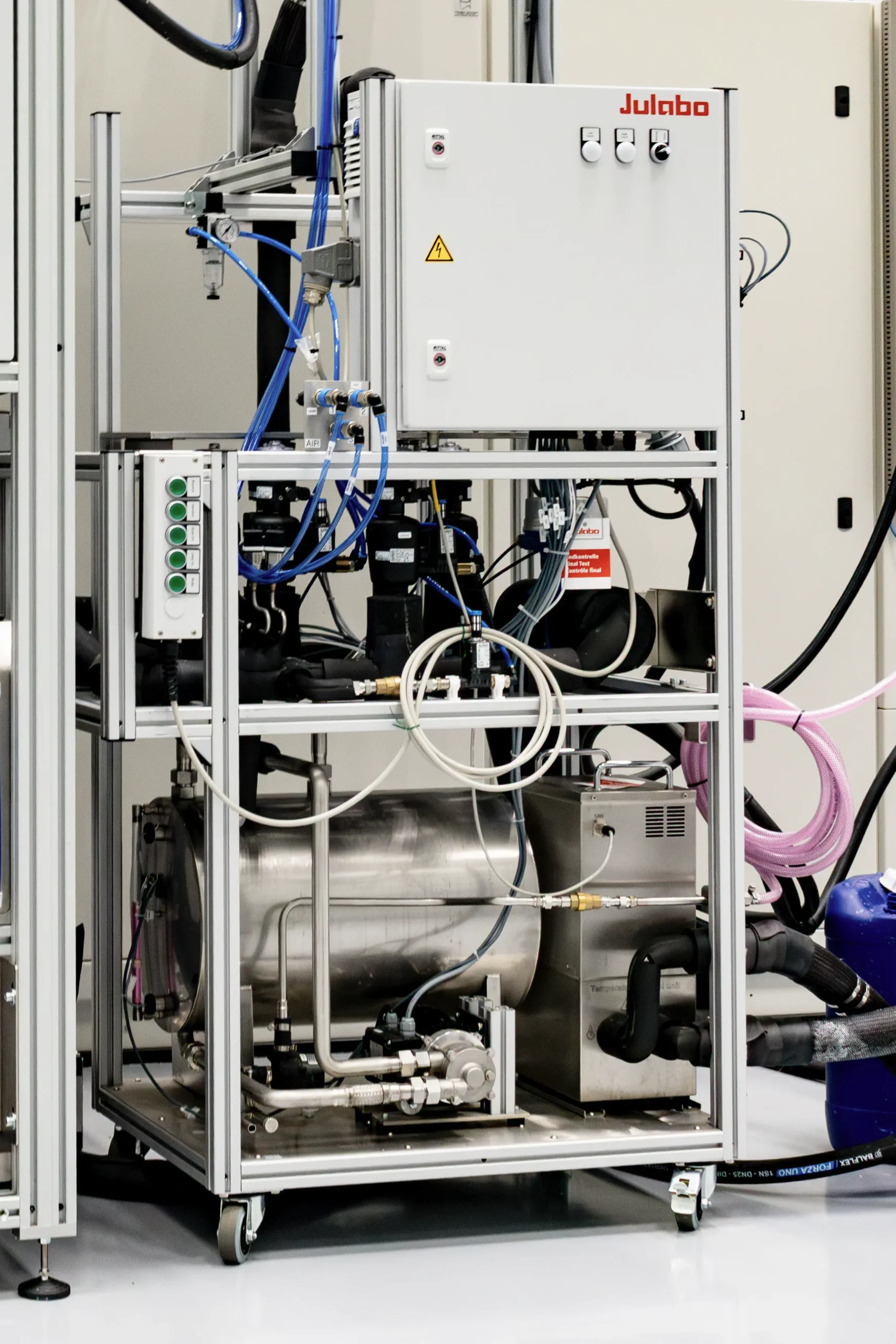
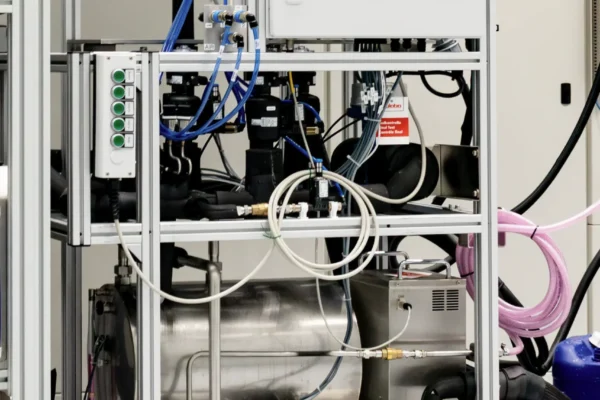
To manage the significant thermal load generated by the product during testing, the system incorporates a glycol hydraulic circuit controlled by an independent chiller, which regulates the product’s internal temperature throughout the entire test cycle, independently of the climatic chamber. After each screening cycle, an integrated deionised water washing module automatically cleans the product’s hydraulic circuit, removing glycol residues and preparing the unit for removal, without operator intervention.
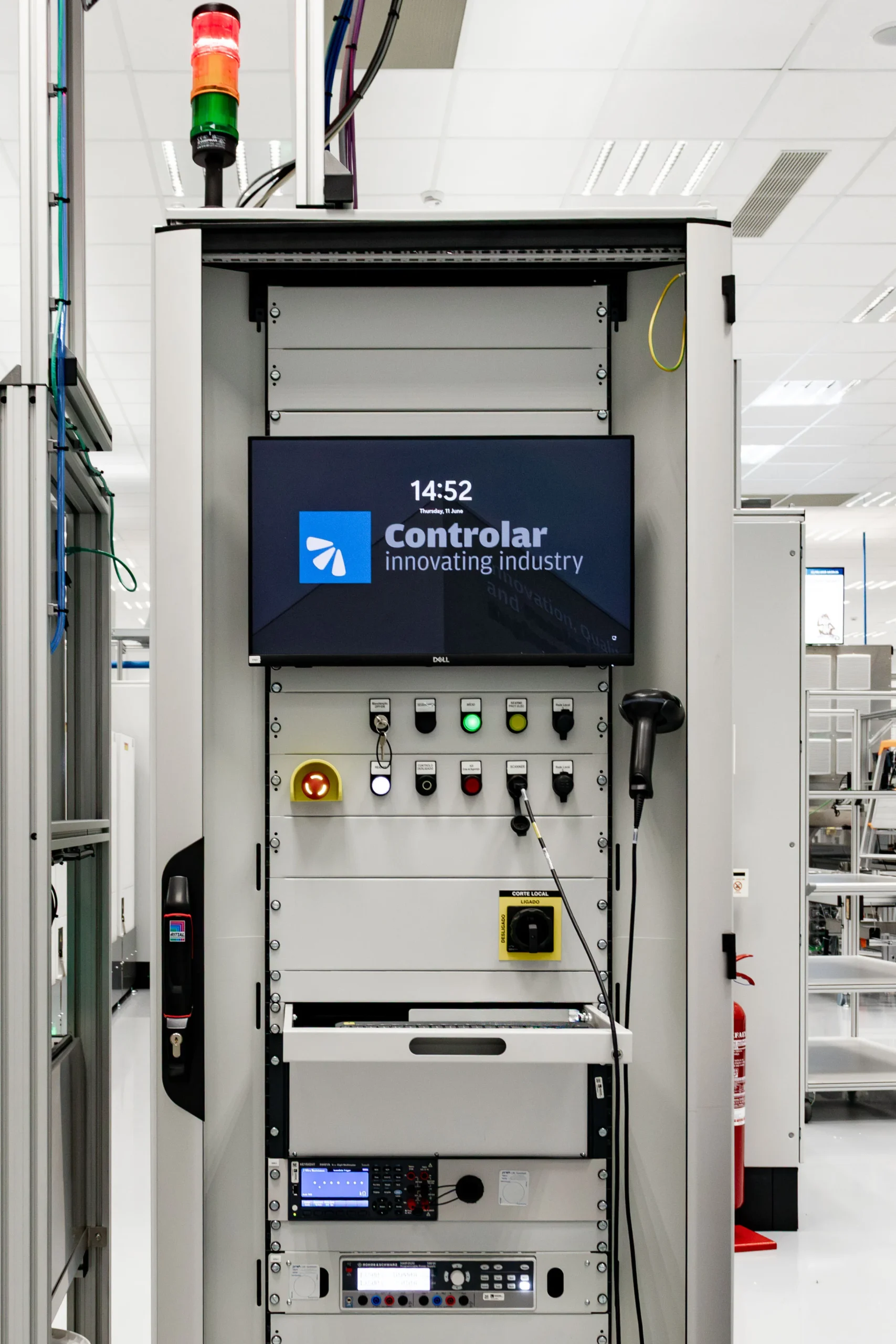
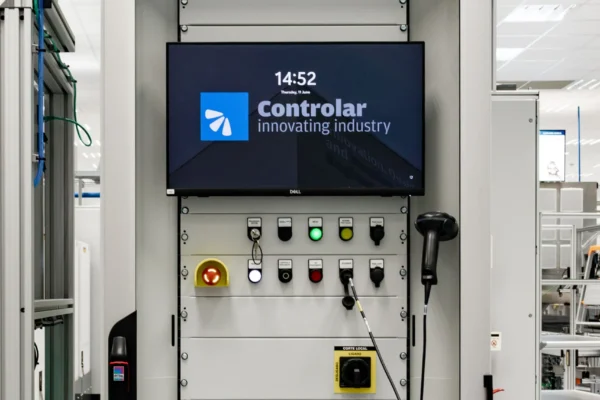
Product traceability is ensured by Data Matrix code reading during loading, and the entire test sequence — from thermal ramps and electrical parameterisation to converter mode activation, symmetry checks, current and voltage validation, and final status verification — is fully automated and managed by Controlar’s proprietary test management software.
The complete screening cycle takes approximately 1 hour and 45 minutes per unit, ensuring exhaustive validation of each product before it leaves the production line.
The system is already installed and in operation at the customer’s facilities.
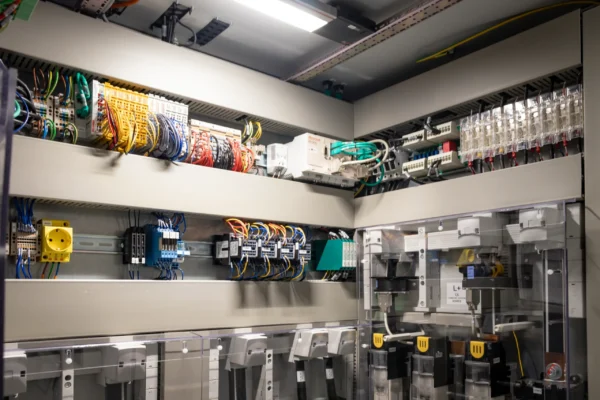
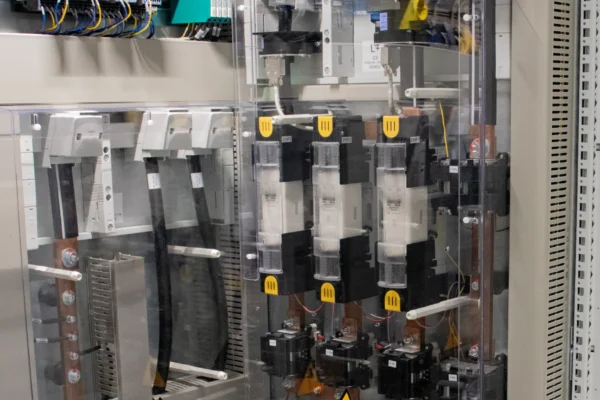
ESS for Electric Vehicle Powertrain Components: The Applied Concept
Electric vehicle powertrain components, such as DC-DC converters and high-voltage conversion units, operate in some of the most demanding conditions in the automotive world, combining extreme temperatures with high electrical loads in a compact package with critical safety requirements. Environmental Stress Screening applied to these components goes beyond conventional thermal cycling: the product under test must operate at full functional load throughout the entire temperature profile, from deep cold (−40 °C) to intense heat (+85 °C). This combined approach validates not only thermal resilience, but also electrical performance, functional behaviour and safety margins under conditions that closely reproduce real operation.
When applied as part of the production validation process, screening enables manufacturers to detect latent defects before products reach the market, significantly reducing warranty costs, field failures and safety risks — an essential requirement for high-voltage components in electric vehicles, where failure is not an option.
Watch the system in operation, from product loading and the thermal ramp to converter mode activation and final validation.
For more information about Controlar’s ESS solutions: